


8 Jacksonville Real Estate Growth Statistics

Jacksonville is officially one of the fastest-growing major cities in the Southeast.
In this article, we’re going to take an in-depth look at the growth patterns that are impacting real estate across the region. Population gains, infrastructure investment, and economic expansion all play a major role in shaping the housing market.
Luxury buyers, sellers, investors, and relocation clients should keep these facts in mind when making decisions.
With that being said, here are 8 real estate growth statistics in Jacksonville that every buyer and seller should know in 2026.
1. Jacksonville’s Population Surpassed 1 Million Residents
According to the latest U.S. Census Bureau estimates, Jacksonville’s population reached approximately 1,017,689 residents in 2025, officially placing it among a small group of U.S. cities with populations above one million.
What this means for buyers: Cities crossing this threshold often attract more employers, restaurants, entertainment, healthcare systems, and infrastructure investment. Buyers purchasing in Jacksonville today are buying into a city that is evolving and expanding nationally.
What this means for sellers: As Jacksonville gains national attention, more out-of-state buyers are discovering the market. That continued exposure can improve long-term housing demand, especially in desirable neighborhoods and suburban growth corridors.

2. Jacksonville Added More Than 8,300 Residents in a Single Year
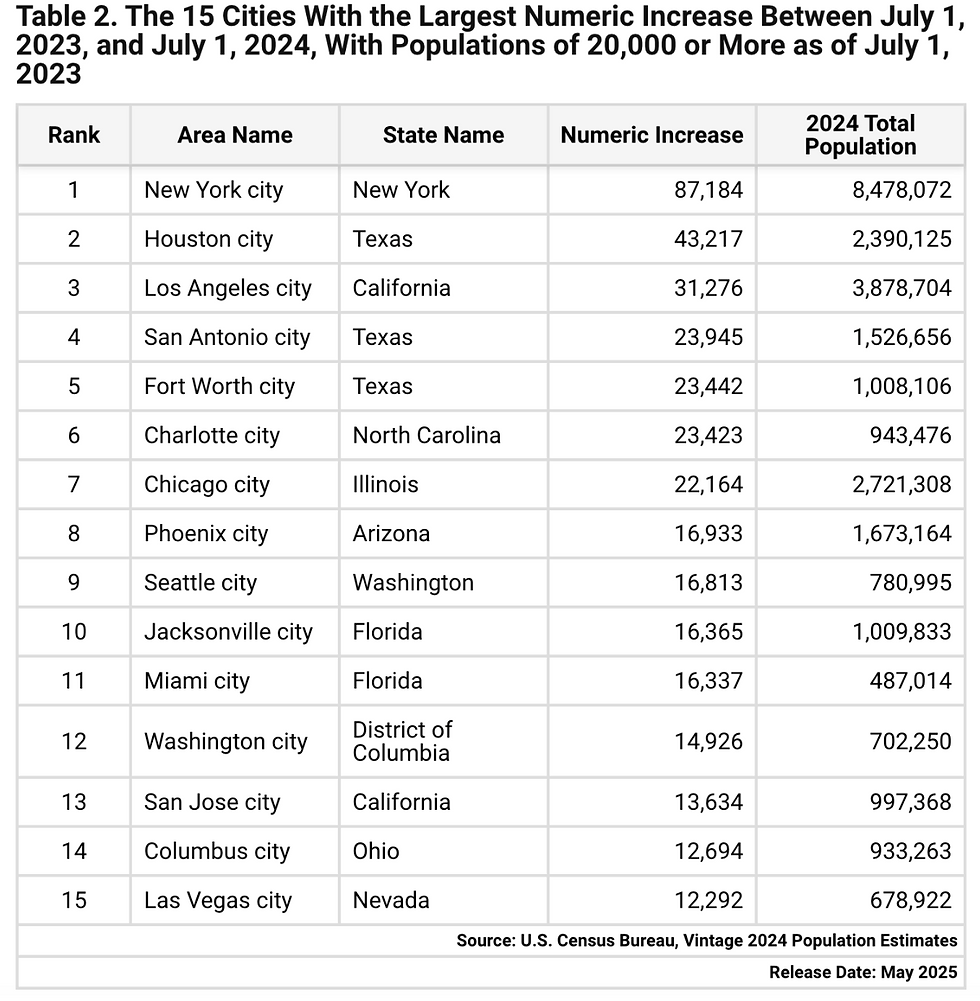
Not only did Jacksonville surpass 1 million residents in total last year, but between July 2024 and July 2025, Jacksonville added approximately 8,319 residents in just one year, ranking among the top cities in the nation for numeric population growth. (See the Table Above)
What this means for buyers: This continues to speak to the impact of population increases on the housing market. Continued population growth creates ongoing housing demand. Even when the market cools temporarily, growing cities tend to recover faster because more people are still moving into the area.
What this means for sellers: Population growth increases the overall buyer pool. Sellers in move-in-ready homes or homes near major employment areas may continue benefiting from relocation demand.
3. Jacksonville’s Population Has Grown More Than 23% Since 2010
Jacksonville’s population increased from 821,784 residents in the 2010 Census to more than 1 million residents in 2025, giving it a 23% increase across the decade and a half. Not only does this speak to the increase in potential buyers, but also to the consistency in growth. Definitely a good sign for investors considering purchasing in Northeast Florida.
What this means for buyers: Buyers looking for long-term investments often pay close attention to cities with sustained growth over multiple decades.
What this means for sellers: Strong long-term population trends can help support property appreciation and neighborhood development, especially in areas with good schools, newer construction, or convenient commuting access.
4. Jacksonville Is the Largest City by Land Area in the Contiguous United States
Jacksonville spans roughly 747 square miles of land and 127 square miles of water, making it the largest city by land area in the contiguous U.S.
What this means for buyers: Jacksonville offers more housing diversity than many Florida cities. Buyers can choose between beach communities, historic urban neighborhoods, suburban master-planned developments, or even more rural properties while still remaining within the Jacksonville market.
What this means for sellers: Because the city continues expanding geographically, growth is not limited to one small urban core. Sellers in developing suburban areas may continue seeing increased demand as buyers search for affordability and newer homes.
5. Jacksonville Was Ranked #9 of the 15 largest population-gaining cities in America Last Year
The U.S. Census Bureau ranked Jacksonville among the top 15 cities nationwide for the largest numeric population gains between 2024 and 2025, with an increase of 16,365 people in just one year.
What this means for buyers: Fast-growing cities often experience continued infrastructure expansion, retail development, and job creation. Buyers who enter these markets earlier may benefit from long-term neighborhood growth.
What this means for sellers: Strong migration trends can create a steadier stream of potential buyers, even during slower national housing cycles.
6. Jacksonville’s Housing Stock Continues Growing Alongside Population
The Census Bureau reported that U.S. housing inventory continued growing through 2025, particularly in Southern states where population growth remains strongest. Jacksonville has continued adding apartments, master-planned communities, and suburban development to help meet demand.
What this means for buyers: More new construction can create additional opportunities and sometimes reduce the extreme competition seen during the height of the pandemic housing boom.
What this means for sellers: While more inventory can create additional competition, strong population growth helps absorb new housing supply over time, especially in desirable areas.
7. Florida’s Population Continues to Dominate National Growth Trends
Recent Census data showed many of the nation’s fastest-growing counties and metro areas remain concentrated in the Southeast, particularly throughout Florida and neighboring Southern states. In particular, Florida’s population has grown 8.9% since 2020, and nearly 25% from 2010 to 2025.
What this means for buyers: Jacksonville continues to benefit from broader relocation to Florida. Buyers moving from higher-cost states often view Northeast Florida as relatively affordable compared to South Florida or other major metros.
What this means for sellers: Continued migration to Florida supports long-term buyer demand across Northeast Florida communities.
8. JAXPORT Generates About $44 Billion in Economic Impact
Cargo activity through Jacksonville’s seaport supports approximately $44 billion in annual economic output and more than 258,000 jobs statewide.
What this means for buyers: Strong economic infrastructure matters because jobs drive housing demand. Jacksonville’s logistics, shipping, and transportation industries help create long-term economic stability for the region.
What this means for sellers: Major economic drivers like JAXPORT support workforce growth, business expansion, and continued relocation into Northeast Florida, all of which can strengthen housing demand over time.
Final Thoughts
The Jacksonville housing market shows a much bigger picture than what’s on the surface. When reviewing the current data, Jacksonville is a city continuing to grow in population, infrastructure, economic influence, and national visibility.
For buyers, these statistics highlight why many people believe Northeast Florida still has long-term growth potential. For sellers, they help explain why Jacksonville has remained one of the more resilient housing markets in the Southeast despite shifting national trends.
Whether you’re buying or selling, Jacksonville is a hot spot right now and is worth looking into for long-term investments. If you’re looking to make moves in real estate, it’s worth talking to a local real estate advisors who know the nuances of the area and when the best time to sell or buy. Reach out to Sanborn Group Jax by phone or email, and we’d be happy to walk you through the process.


Comments